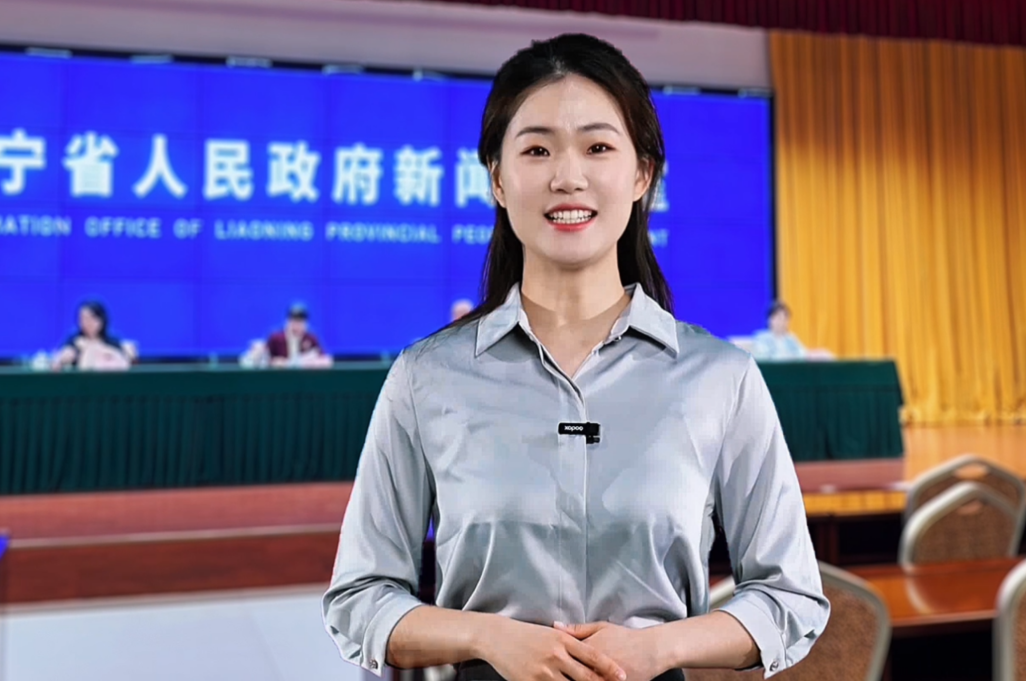

On April 22, the Information Office of Liaoning Provincial People’s Government held a press conference to introduce and interpret policies for advancing smart upgrading and digital transformation in the province’s manufacturing sector.
By the end of the first quarter of this year, the adoption rate of digital R&D and design tools in Liaoning had reached 86.7 percent, placing the province 13th nationwide, while the numerical control rate of key processes stood at 69.9 percent, ranking 10th nationwide. In response to new circumstances, tasks, and challenges, Liaoning has issued the Three-Year Action Plan of Liaoning Province for Deepening Smart Upgrading and Digital Transformation in Manufacturing (2026-2028) and the Special Policy of Liaoning Province for Comprehensively Advancing Smart Upgrading and Digital Transformation in Manufacturing, and set out the 2026 Key Tasks for Smart Upgrading and Digital Transformation in Liaoning’s Manufacturing Sector.
According to the Three-Year Action Plan, by 2028, smart upgrading and digital transformation will cover all industrial enterprises above designated size across the province, while eligible specialized and sophisticated small and medium-sized enterprises will undergo smart upgrading and digital transformation wherever feasible. Basic digital products and applications will be widely adopted among small and medium-sized enterprises, and a number of smart factories and typical application scenarios with distinctive Liaoning features will be developed.
The Special Policy provides provincial fiscal support for free diagnostic services for enterprises, pilot city projects, and the development of industrial brain platforms. It also supports the implementation of smart upgrading and digital transformation projects through loan interest subsidies. Eligible projects may receive interest subsidies for a cumulative period of up to one year, with the subsidy rate capped at 80 percent of the one-year Loan Prime Rate (LPR). Financial institutions are encouraged to innovate financial products and services and provide low-cost financing for such projects.
The 2026 Key Tasks include organizing diagnostic service providers and experts to engage with enterprises on site, systematically assessing their current conditions and identifying their problems, and developing tailored upgrading plans for each enterprise. For eligible enterprises, targeted matchmaking will be organized to facilitate project implementation. Liaoning will also advance smart factory development on a tiered basis, aiming to add more than 80 advanced-level smart factories and 10 excellence-level smart factories this year.